
BENEFITS OF NITRIC OXIDE https://news.bionoxusa.com/5-methods-to-boost-nitric-oxide-with-whole-foods/?gad_source=1
What is nitric oxide and what does it do?
NO is a powerful gas that serves as a messenger molecule. NO is vital for most cells in the body. For those for whom chemistry is not their forte, we abbreviate nitric oxide as NO because it has one nitrogen molecule and one oxygen molecule. NO’s biggest role in the body is that of vasodilator. This means NO signals the smooth muscles in the inner lining of arterial walls to relax and expand. When this happens, blood flow can become more efficient. Also, NO is capable of triggering immune cells to fight off infections and intruders. Furthermore, NO helps neurons in the brain communicate, fending off cognitive disorders such as Alzheimer’s.
With all this being said, what else can nitric oxide do? To avoid making this article way too long, I will just provide a list of other benefits rather than a detailed breakdown. NO can:
- Lower blood pressure
- Helps control joint inflammation and arthritis
- Supports bone health
- Helps keep arteries flexible
- Works to keep skin healthy
- Protects skin from sun damage
- Reduces risk of heart disease
- Can help reduce erectile dysfunction in men
- Helps lower cholesterol
- Helps prevent blood clots from forming
- Can reduce the risk of diabetes
- Able to improve energy and stamina
- Improves exercise performance
- Can reduce muscle soreness
- AND STILL SO MUCH MORE!
It is easy to see how essential NO is to our health. These many benefits are exactly why we refer to NO as the miracle molecule.
So, which foods help you boost nitric oxide?
If you’re looking to use nitrates as a NO booster for your diet, most vegetables – particularly leafy greens – are the best choice. Following those would be other foods such as certain fruits, meat, dark chocolate, garlic, and some nuts and seeds. If you’re looking at the amino acid L-arginine to boost nitric oxide, some choices for food could include salmon, almonds, dairy products, and other nuts and seeds. If the choice is the amino acid L-citrulline, some food choices can include watermelon, pumpkin, squash, chickpeas, and cucumbers.
Below you will see a list of foods to keep handy for trips to the grocery store. If you buy several of these superfoods, you’ll for sure be maximizing your nitric oxide production capacity, no matter what age you are.
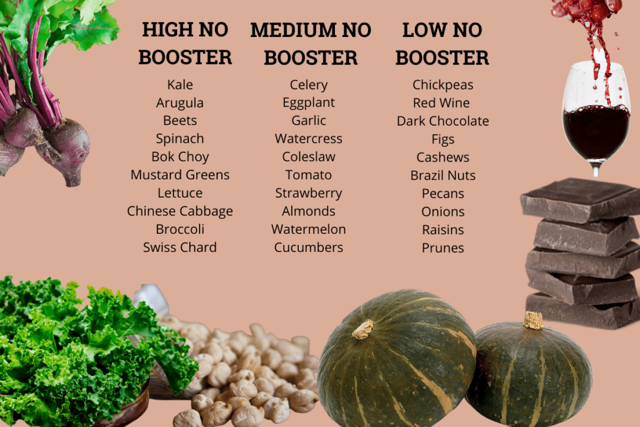
Boost nitric oxide with this whole foods list
How to use whole foods to boost NO production
Now for what you clicked on this article for. Now that you know a little more about what nitric oxide is and what foods to eat to boost it, we can look at a few tips for meals you can use to maximize your nitric oxide production at every meal. Be sure to keep these tips in mind. Consider bookmarking this article so you can come back to it later for reference.
Tip #1: Eat RAW greens with every meal if possible. At the very least, shoot for raw greens with one meal every day at an absolute minimum. Because greens are so high in nitrates, they are the ideal whole food for boosting nitric oxide. Eat them raw if possible, since cooking them can diminish some of the nutrients your body can use.
Tip #2: Polyphenols make a great addition to your meals. Polyphenols are antioxidants found in foods such as grapes, dark chocolate, and berries. Red Wine also contains polyphenols, so having a glass at dinner can boost your nitric oxide production.
Tip #3: Add unsaturated oils to the mix. This means olive oil, avocado oil, and other oils containing healthy fats. Eating more fish or supplementing fish oil is recommended as well.
Tip #4: Less is more. The less prepping and cooking required, the more intact the nutrients needed for nitric oxide production stay. Limit the amount of boiling for baking in your meals containing vegetables and fruits.
Tip #5: Stay away from NO-depleting foods. Processed foods, fried foods, salty foods, sugar, and saturated fats all create oxidative stress in the body. These create free radicals that lead to inflammation and other problems. Limit your consumption of these foods as well as beer and liquors to maximize your nitric oxide production.
 Promoting HEALTH | WELLNESS